
what I actually use
Uses
Last reviewed
-
 ZSA Voyager
-
 Fairphone 6
-
 Supernote Manta
-
 ThinkPad X1 Carbon
-
 Home Assistant Green with a Zigbee and Thread (Matter) stick
This is the hardware, software and services I use every week, and what I (dis)like about them. These are the tools that stood the test of time and best match my principles, plus some new items I'm trying out.
Every pick has pros and cons. I tried explaining why I picked something over something else and how I handle/accept the downsides. Some items link to the post where I wrote about the switch.
How I pick tools
-
Own the data, or be able to leave
Before I adopt a tool I assume I will one day want to leave it again, so I want to confirm the available exit strategy. An app that lets me export plain files (e.g. Markdown) and uses open protocols (e.g. CalDAV) will beat a nicer app that holds my data hostage.
-
Open standards first, open source second
I start with open protocols and formats that more than one tool speaks - AT Protocol, CalDAV, IMAP, Markdown - because that's what lets me actually leave. Open source is the bonus: I can read the code, adjust it if I need to. But I'll take a closed app on an open protocol over an open app that locks my data in. Closed is fine if my data stays mine and leaving costs nothing: Plex is closed, but my library is plain files on my NAS, so I could switch to Jellyfin tomorrow like nothing happened.
-
Local-first, cloud optional
Home automations, media players and family photos should keep working when the internet (or a vendor) doesn't. Cloud is a nice extra, but things shouldn't break when it's gone.
-
The bankruptcy test
For hardware I ask what happens if the company disappears: a device with a local API keeps working, while a cloud-only one (e.g. most voice assistants) becomes e-waste.
-
Buy once, never rent your own data
I pick a one-time purchase when one exists. The subscriptions I have are mostly for convenience or to support the makers, not for access to my own data.
-
EU law-respecting, EU-hosted preferred
GDPR exists for a reason, so I lean towards European providers. I'm an EU citizen, so non-EU tools still have to respect my rights under GDPR, and when they do, using them is fine. Avoiding every piece of software or hardware that phones home is not practical, so I disable telemetry or block it.
-
Own my identity
My own email domain makes later migration easier: the provider behind it can change while my address stays the same. I use my own domain as my handle (gui.do) on Bluesky via AT Protocol and keep my account data on a PDS, the server that stores it, so I can swap out the PDS host whenever I want while my handle and followers stay where they are.
-
Replace gradually
My selection criteria evolve over time, but that doesn't mean that I throw out all my gear the moment it no longer fits: I try to make practical and environmentally conscious decisions and (re)use what I can. It's about making decisions that take me in the right direction and form good future foundations, not about having it all perfect right now.
Show only
Defaults
- Mail service
- Fastmail
- Mail client
- Fastmail
- Calendar
- Fastmail
- Contacts
- Fastmail
- Notes
- Obsidian
- Handwritten notes
- Supernote Manta
- RSS
- FreshRSS
- Browser
- Zen browser
- Search
- DuckDuckGo
- Chat
- Signal
- Social
- Bluesky
- Passwords
- Bitwarden
- 2FA
- Aegis Authenticator and YubiKey
- Code editor
- Zed
- Terminal
- Ghostty
- Code hosting
- Tangled
- Photo library
- Immich
- Photo editing
- darktable
- Music
- Plexamp
- Audiobooks
- Audiobookshelf
- Video
- Grayjay
- Office
- LibreOffice
- Analytics
- Umami
- Newsletter
- Listmonk
- Local AI
- Ollama
- Hosted AI
- OpenRouter
- AI coding agent
- OpenCode
- OS
- CachyOS
Personal hardware
-
Desktop PC (AMD Ryzen, RTX 5070)
One machine for code, calls, streaming and most games, and the one my other devices attach to.
-
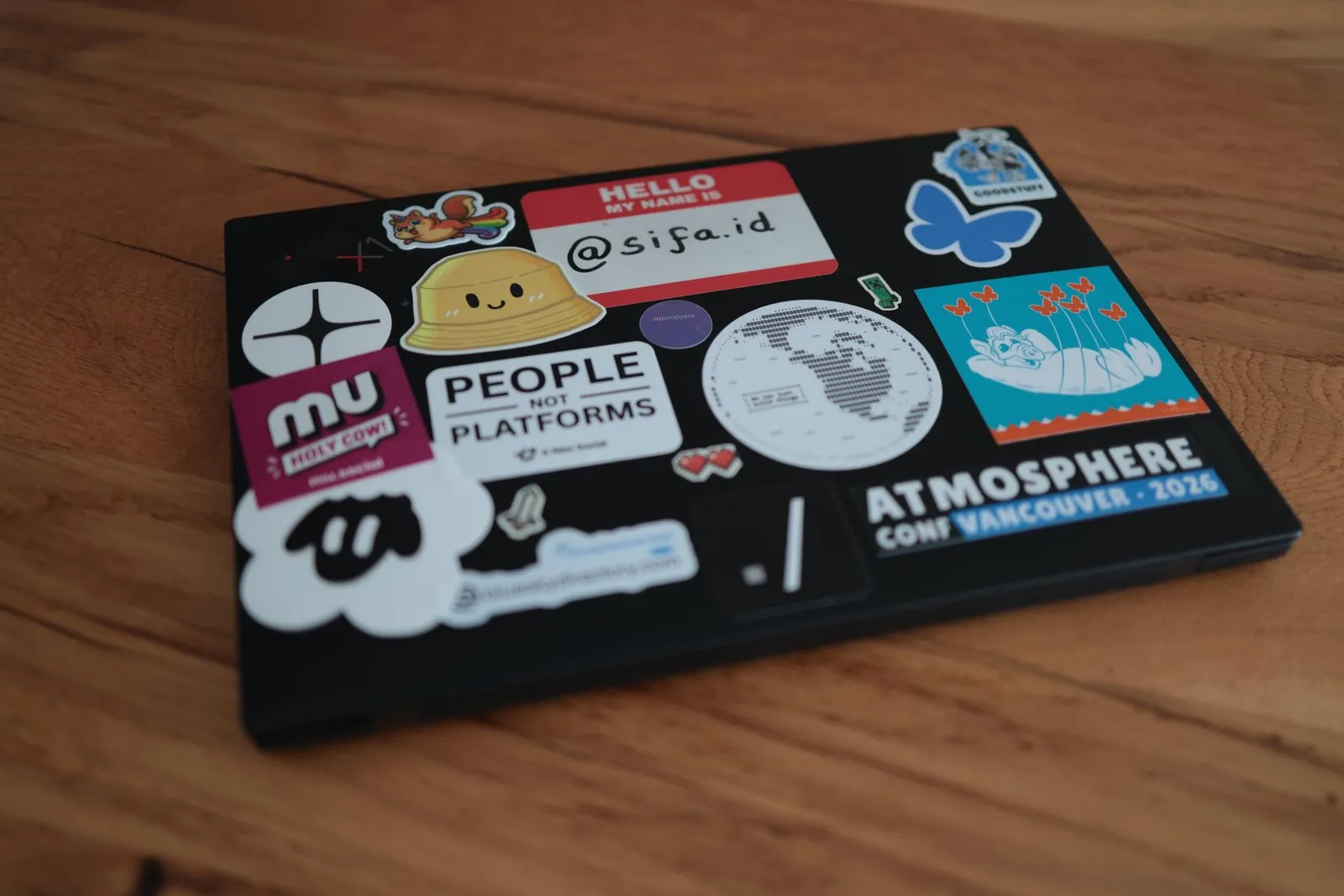
ThinkPad X1 Carbon
A second-hand laptop that runs Linux without fuss. It syncs with the desktop and attaches to the same tmux sessions.
-
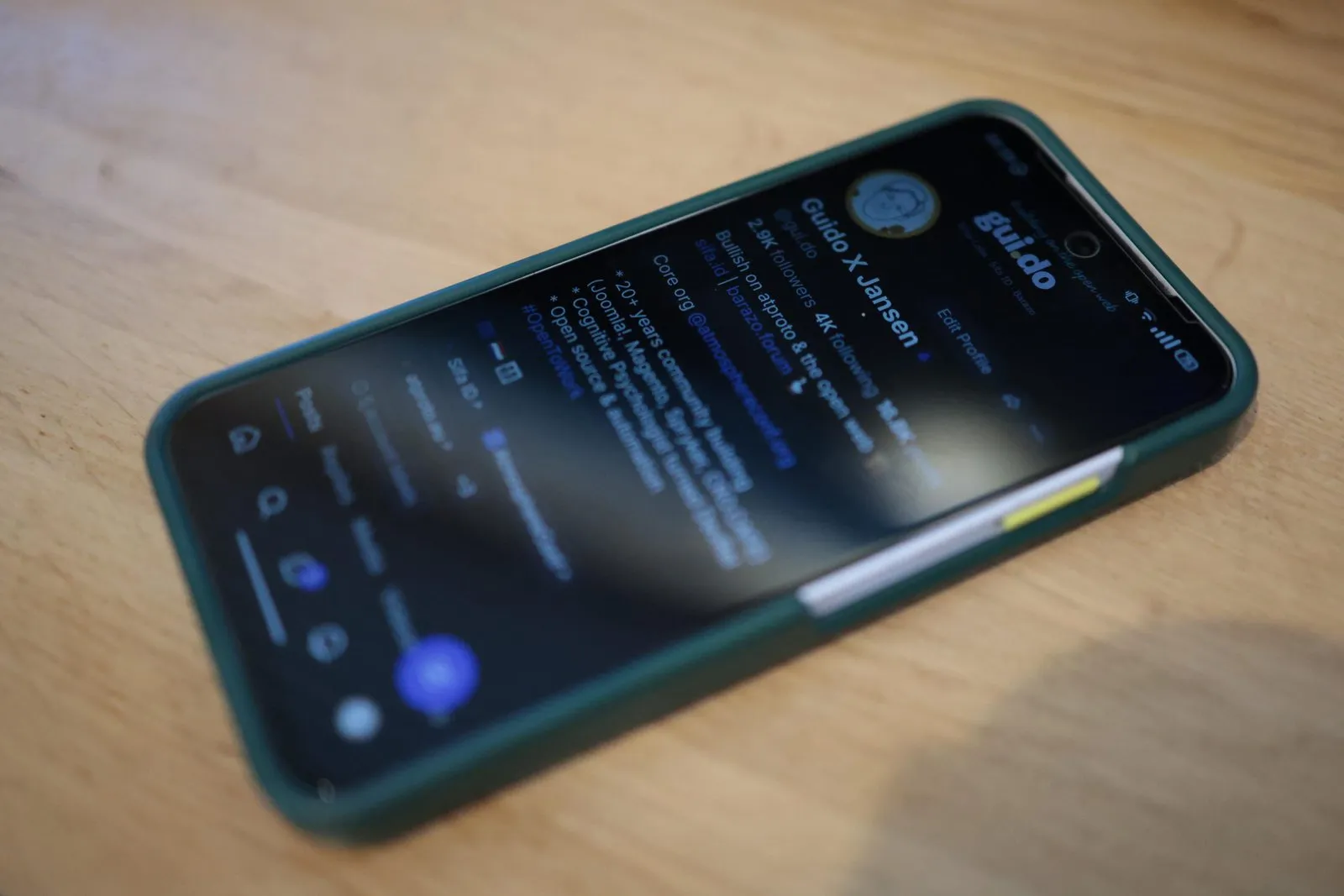
Fairphone 6
Tags: EU
Repairable and ethically sourced. The phone it replaced was dying (well, mainly its battery).
-
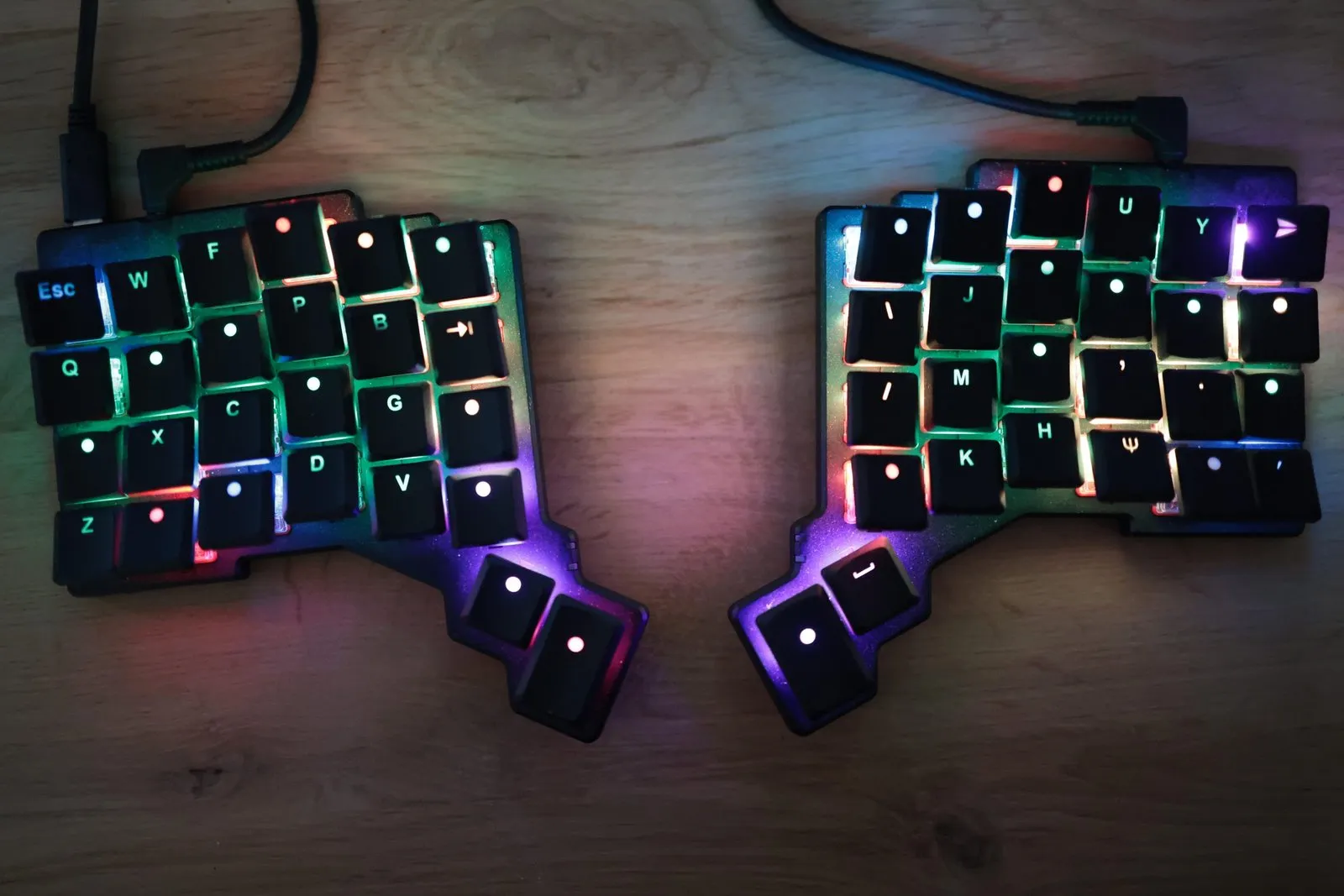
ZSA Voyager
A split, programmable keyboard that I'm still learning Colemak DH on.
Downside: Typing speed dropped while I learn the new layout.
-
Supernote Manta
Tags: I host it myself
An e-ink tablet for handwritten notes and e-books that syncs to my own server instead of the vendor cloud.
-
Fully Jarvis L-shaped standing desk
I like standing up for calls and for some of the work, but not all day. So I needed a desk that can reliably go up and down and gives me a lot of space. Since I'm in the corner of my home office, the L shape makes perfect sense and works great. It's a very stable frame on which I could put my own custom tabletop. Combined with the Aeris Muvmat it's great for alternating between sitting and standing.
-
Aeris Muvmat
Tags: EU
Nice "forest pebbles" surface for standing work/calls that is both soft and makes you move around (so you don't lock yourself into a single position too long).
-

Interstuhl TWENTYFOUR
Tags: EU
I sit at my desk a lot. Not 24 hours, but I still really needed this to be a good one. I like my back not hurting all the time ;) The seat and back covers come off for cleaning!
Downside: More boring compared to those hip gaming chairs, but if I sit in it I don't see the chair anyway, but do feel it ;)
-
Sony WH-1000XM5
I bought it because I was quite happy with my XM3, but lost that at an airport. If I need to replace these, I'll probably go for the Fairphone Fairbuds XL.
-
Samsung Galaxy Buds Pro
-
Garmin Epix Pro
A very good product and fun to customize the dials yourself.
Downside: Their app ecosystem has some weird quirks and they are starting to behave like a monopolist. Especially on a watch priced like this, I'd expect to be able to use all features, not have some locked behind a paywall. I would go for an EU-based alternative next time.
Home
-
Firewalla
A router and firewall with per-device rules and domain blocking, without needing a cloud account for the basics. I use it for custom DNS rules, network insights and blocking ads and trackers across the whole network.
-
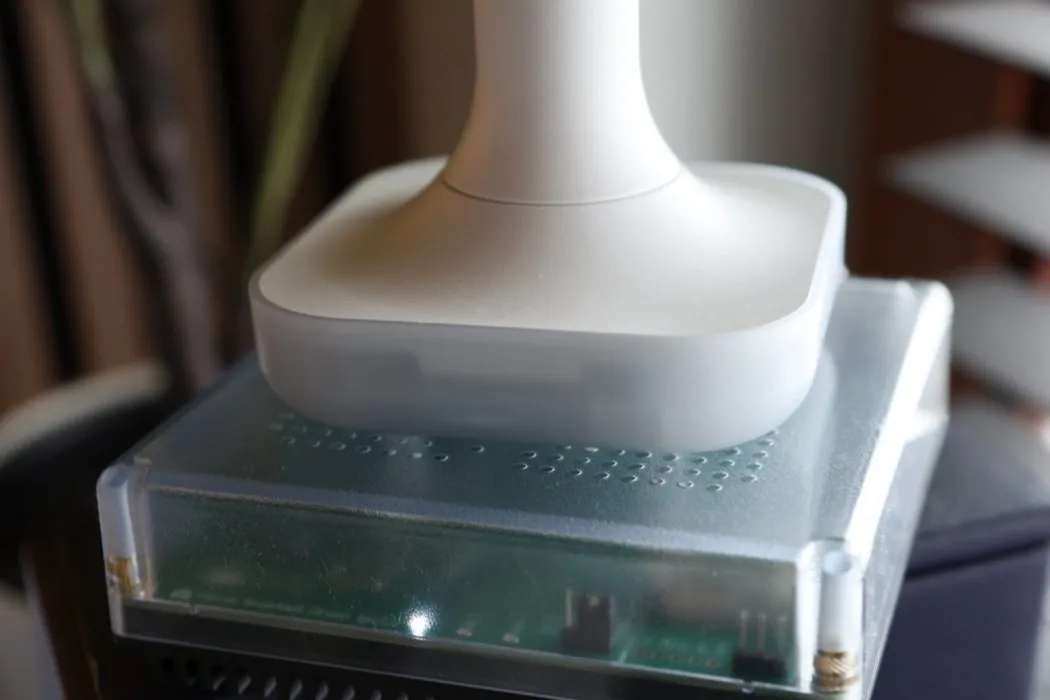
Home Assistant Green with a Zigbee and Thread (Matter) stick
Tags: Open source, I host it myself
Central hub for all home-based automations, without any reliance on the internet. It's a dedicated box, so I can reboot my other machines freely.
-
HomeWizard P1 meter, water meter and plugs
Tags: EU
They have a local API, so Home Assistant reads them directly. I switched off their cloud connection.
Downside: Without the cloud connection their own app loses history and remote access. The HomeWizard plugs are overpriced, so the new plugs I buy now are IKEA GRILLPLATS.
-
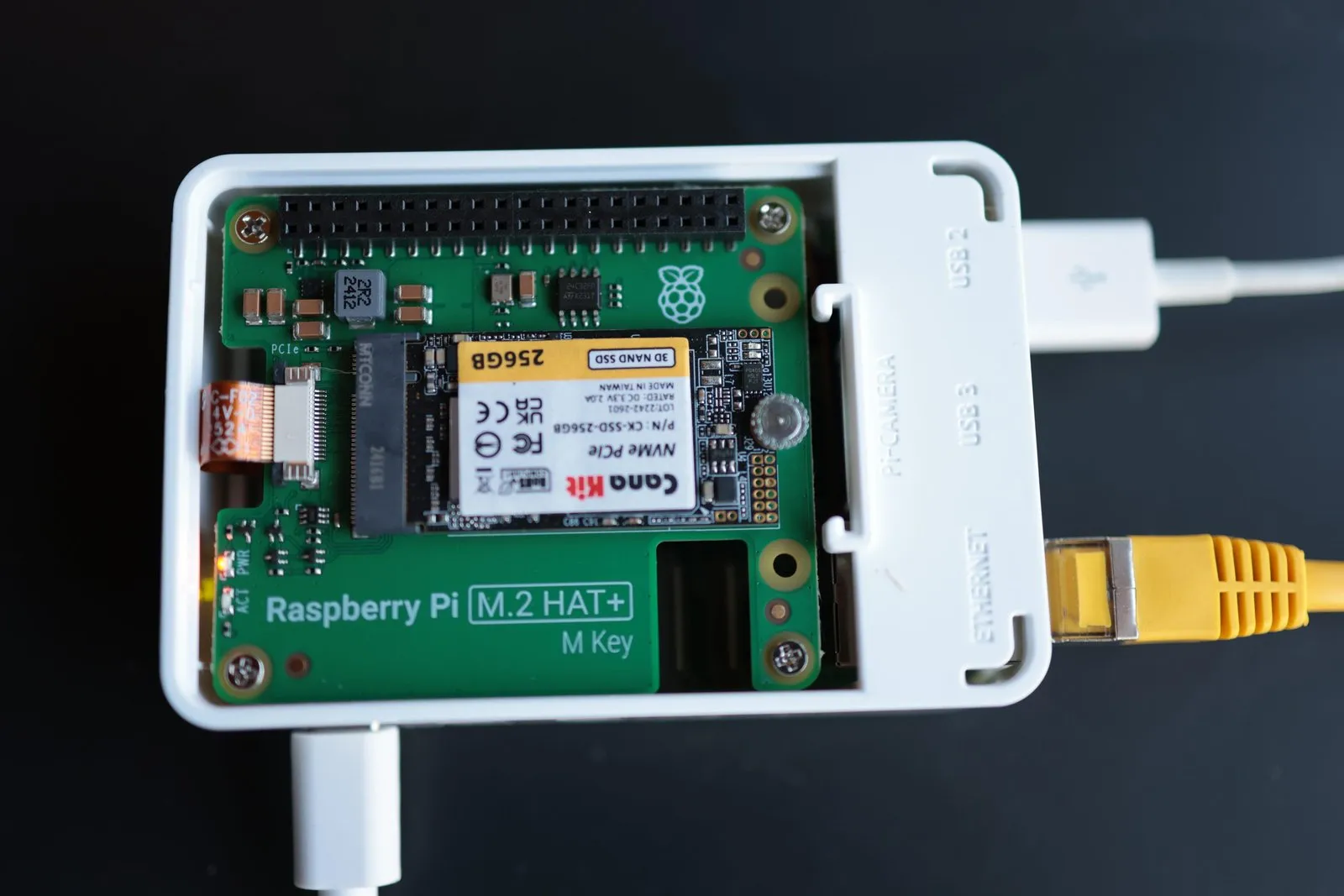
Raspberry Pi 5
Tags: I host it myself
It runs some of my containers to take the load off the NAS. Especially for write-heavy containers it's nice to be able to bring down the HDD noise from the NAS (the RPi has an NVMe drive that doesn't make any noise).
-
Stages SB20
I chose it because it's the best complete and compact indoor bike (as in: not a roller for an outdoor bike) I could find that didn't require a subscription to ride. It needed to fit in my home office, so it couldn't be too long. You can adjust the handlebars and seat up, down, forward, or back, which makes it great.
-
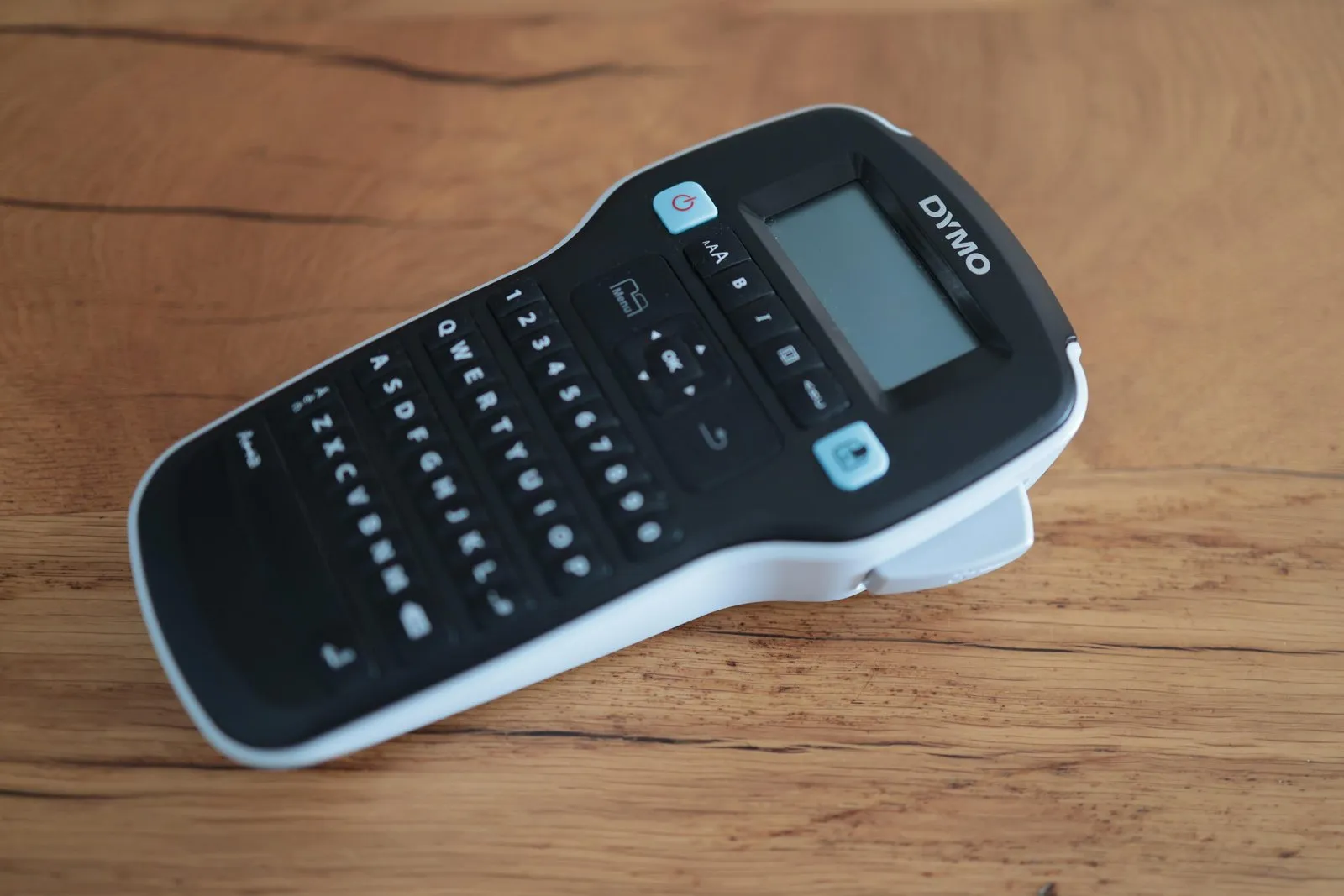
DYMO LabelManager 160
I love it because (afterwards) it helps me find things much faster.
Downside: My girlfriend hates it (when labels are visible anywhere).
-
Brother color laser printer
-
Canon SELPHY photo printer
OS and desktop
-
CachyOS with KDE Plasma
Tags: Open source
A fast Arch-based Linux that I manage with config in git. On my laptop since early 2026 and on my desktop since October 2026.
Downside: A few games and the iOS tooling still need other systems. Wanted niri, but it didn't play nice with my Elgato Prompter (DisplayLink, NVIDIA) and swiping... so KDE Plasma for now.
-
chezmoi with metapac
Tags: Open source
Dotfiles and package lists synced across my Linux machines from one git repo, with secrets encrypted. This, combined with Obsidian Sync and a WireGuard connection ensures that it makes no difference whatsoever if I work on my Linux machine at home, or on my laptop while traveling.
-
Zen browser
Tags: Open source
My main browser. Firefox-based, with workspaces, and all tabs sync live between machines.
-
Handy
Tags: Open source
Local speech-to-text, so my voice never leaves the machine.
-
LibreOffice
Tags: EU, Open source
Development
-
Ghostty and tmux, with sesh and workmux
Tags: Open source
tmux sessions that live on the desktop. I attach from the laptop or my phone and continue where I left off.
-
Zed
Tags: Open source
A fast, open source editor.
-
Astro
Tags: Open source
Great to build fast static-first sites with the content in markdown files. You are looking at it :).
-
GitHub + GitHub Actions on my own runner
Tags: I host it myself
CI on a small Hetzner server is about four times faster and costs about half of the hosted minutes I was buying. Once Tangled covers the bits I still use GitHub for (private repos, project boards, the Actions marketplace), I'm switching.
Downside: It's Microsoft. A self-hosted runner executes whatever the workflow says, so it's only safe for private repos unless you require approval for outside contributors' workflows. Ephemeral runners (fresh container or VM per job) make this safer.
-
Codeberg
Tags: EU, Open source
A non-profit, EU-based forge for private repos and my synced dotfiles. Planning to move to Tangled once it supports private repos.
-
Termux
Tags: Open source
Android terminal. I use it to SSH from my phone into the tmux sessions where my AI coding sessions run.
AI (local and hosted)
-
Ollama
Tags: Open source, I host it myself
Local models on my own GPU for when I'm offline, out of quota, or the data is private.
Downside: Slower and less capable than the hosted models, and the GPU draws about 210 W while it runs.
-
OpenRouter
One API for many models, so I can swap models without changing tools. Lock-in is low, so I accept a US service here.
Downside: A US service, and not self-hosted. And depending on the model/provider, they might train on your data.
-
OpenCode
Tags: Open source
Open alternative to the other CLI tools. For development I can't really get used to doing this through their apps, terminals rule for me.
-
Hermes Agent
Tags: Open source
-
Mistral Vibe
Tags: EU
For mobile one-off questions an AI answers better than a search engine. Mistral is French/EU.
Notes and reading
-
Obsidian
Everything is plain Markdown on my disk. I pay for Obsidian Sync for the mobile convenience and to support the developer.
Downside: The sync service is a monthly subscription, even though the app itself is free.
-
FreshRSS
Tags: Open source, I host it myself
RSS back in my life after the Google Reader shutdown, on my own server.
-
Audiobookshelf
Tags: Open source, I host it myself
-
RedReader
Tags: Open source
Media
-
Immich
Tags: Open source, I host it myself
I host my family photos and videos on my own NAS, backed up from my phone. The heavy machine-learning work runs on my desktop GPU instead of the NAS.
Downside: The first import and face recognition crushed the NAS CPU for days.
-
Plex
Tags: I host it myself
Wouldn't start using it today, but I bought a lifetime pass when it was very cheap and the combination with Plexamp is also convenient. Ideally I'll replace it with an open source alternative at some point (Jellyfin?) but it's not high on my todo list.
Downside: Plex is closed source.
-
NVIDIA Shield TV Pro
Android TV box; much better than the bloatware that ships with TVs.
Downside: Old; no update from NVIDIA in sight.
-
Symfonium
-
Plexamp
-
Grayjay
One client for YouTube and other video sources, on desktop and phone.
-
NPO Start
Tags: EU
My kids want Dutch programming. Netflix and Disney+ are too weak on that.
Self-hosted and web
-
Synology NAS
Tags: I host it myself
It runs my containers. I wouldn't buy a Synology today, but I see no reason to replace one that works.
Downside: HDD noise, current HDD prices, and Synology locking down its systems more and more.
-
Home lab tools
Tags: Open source, I host it myself
These are small tools not worth one entry each: Portainer CE, Homepage, Glances, Uptime Kuma, Diun, WireGuard, Paperless-ngx, Calibre-web, Kiwix, NocoDB, and n8n. All are open source except n8n (fair-code license).
-
Hetzner
Tags: EU
German hosting for the few things that need a server outside my house, and for CI runners.
-
cal.rs booking page
Tags: I host it myself
A small self-hosted booking page that writes into my own calendar.
-
Self-hosted podcast feeds
Tags: I host it myself
I host static feeds and audio files on my own server to cut out the vendor between me and my listeners. It costs much less than my old Transistor subscription because it's just a small share of a VPS that runs other things too.
-
Umami
Tags: Open source, I host it myself
Privacy-friendly, cookie-free website analytics that I host myself.
-
Listmonk
Tags: Open source, I host it myself
An open source newsletter tool that I run myself, so my subscriber list stays with me.
-
Grafana
Tags: Open source, I host it myself
Open source dashboards I host myself, for Singi server monitoring and keeping my Garmin health data at home.
-
Kairos (my own scheduler)
Tags: I host it myself
A small service I wrote that plans tasks and habits into free time in my Fastmail calendar, based on all kinds of weekly time goals, recurring tasks, todo trackers etc.
-
Netlify
Hosts several of my websites. US company, but pretty good and cheap, and I'm not locked in at all: all code lives on GitHub and locally, so I can move away anytime. I might move the sites to a VPS eventually, but that's not high prio.
Photo, video and streaming
-
darktable and RawTherapee
Tags: Open source
Open source RAW processing on Linux. A script culls the day's shots, RawTherapee exports them, and darktable is for the keepers.
Downside: RawTherapee has no profile for the R6 Mark II, so I borrow one from a sibling camera.
-
OBS Studio
Tags: Open source
Recording, calls and streaming from one scene collection, native on Linux.
Studio and presenting
-
Canon R6 Mark II with 24-105, 70-200, 50 and 35mm lenses
Great lenses and great pictures and videos. I mainly use these for family events.
Downside: Once you've started with Canon, it's really hard to escape the ecosystem lock-in.
-
Sony RX100 V as webcam
Much better than any webcam, especially in lower light conditions.
Downside: Runs hot, but I solved that with a heatsink and a bolted-on mini fan.
-
Røde Procaster and Wireless Pro with Elgato Wave XLR
Everything they make is great.
-
Elgato Key Light, Key Light Air and Prompter
All great to improve call quality and the Stream Deck integration makes it even easier. Works well on Linux with the StreamController app.
-
Elgato Stream Deck and Stream Deck XL
Great for macros/automations, easily opening apps, showing custom graphs/data, media control, lights, audio, Home Assistant...
Gaming
-
Steam
As companies go, Valve seems pretty great.
-
Raspberry Pi 4 with Batocera
Tags: Open source
I use this for retro console games with the kids on the TV: it runs Batocera (open source) and needs no store account.
-
Minecraft Bedrock server
Tags: I host it myself
Kids' favourite game before dinner.
Communication and privacy
-
Bluesky
Tags: Open source
My main social account. I own the handle, and the data lives in a repo I can move. I have many Bluesky accounts and use both the Bluesky app and mu (Eurosky's Android app), since each has features the other lacks. mu is needed to verify accounts with atproto.nl.
-
Sifa ID
Tags: EU
Sifa ID replaced LinkedIn for me: a professional profile on AT Protocol, so the data lives in my own PDS and moves with me. I might be biased though as I'm building Sifa myself ;)
-
Signal
Tags: Open source
Encrypted messaging.
Downside: Some groups are still stuck on WhatsApp, and the (sub)group/community function on Signal is not developed yet.
-
WhatsApp
Honestly, still pretty much needed for some school parent groups.
-
Telegram
I'm actually not using this for messaging any people, but it's my default notification channel for self-hosted tools like Uptime Kuma and for Home Assistant.
-
Marque
Almost all my domains are at Marque. I picked it because the registrar runs on AT Protocol.
Downside: The company behind it is not in the EU.
-
Fastmail
Email, calendar and contacts on open protocols (IMAP, CalDAV, CardDAV) with my own domains. Fastmail has servers in the EU, and my account data sits on those.
Downside: Fastmail is an Australian company outside the EU. In June 2024, it laid off most of its US union's bargaining unit during contract talks. I want to move to a European provider eventually. But I only just moved here and migrating all my email domains takes a lot of time. There weren't many good EU options back then, so I'm staying for now and might look at cirrux.co later.
-
Bitwarden
Tags: Open source
An open source password manager with an export I can leave with.
-
Aegis Authenticator
Tags: EU, Open source
An open source, offline authenticator app that isn't tied to a vendor account.
-
YubiKey
Tags: EU
A hardware security key for MFA or passwordless login where supported.
Next on my list
Things I plan to switch to, and what they would replace.
-
Fairphone Fairbuds XL
Planned for when the XM5 needs replacing.
-
Fairphone Fairbuds
Planned as in-ear, if/when the Galaxy Buds Pro die.
-
Tangled
Planned: move my GitHub and Codeberg repos once Tangled supports private repos (and project boards).
-
Jellyfin
Planned as open source replacement for Plex, but not high on the todo list.
Alternatives to…
- Adobe Lightroom : replaced by darktable and RawTherapee
- Alacritty : replaced by Ghostty and tmux, with sesh and workmux
- Arc : replaced by Zen browser
- Audible : replaced by Audiobookshelf and Symfonium
- Authy : replaced by Aegis Authenticator
- Cal.com : replaced by cal.rs booking page
- Dropbox : replaced by Synology NAS
- Evernote and Notion : replaced by Obsidian
- GitHub-hosted runners : replaced by GitHub + GitHub Actions on my own runner
- Google Drive : replaced by Synology NAS
- Google Photos : replaced by Immich
- Google Workspace : replaced by Fastmail
- LinkedIn : replaced by Sifa ID
- Mac mini : replaced by Desktop PC (AMD Ryzen, RTX 5070)
- macOS : replaced by CachyOS with KDE Plasma
- MacWhisper : replaced by Handy
- Microsoft Office : replaced by LibreOffice
- Reclaim.ai : replaced by Kairos (my own scheduler)
- Reddit app : replaced by RedReader
- Samsung Galaxy S21 Ultra : replaced by Fairphone 6
- Sony WH-1000XM3 : replaced by Sony WH-1000XM5
- Spotify : replaced by Plexamp
- Streaming subscriptions (Netflix, Disney+, Prime) : replaced by Plex and NPO Start
- Transistor : replaced by Self-hosted podcast feeds
- Twitter and Instagram : replaced by Bluesky
- typing by hand : replaced by Handy
- Webflow : replaced by Astro
- WhatsApp : replaced by Signal
- YouTube app : replaced by Grayjay
- YouTube Music : replaced by Plexamp
What I dropped
Stuff I stopped using, and what replaced it.
-
Google Workspace
The Google sign-ins are completely untangled.
-
Google Photos
I want my valuable photo/video library memories in full resolution on hardware I own, and not dependent on a Big Tech monthly subscription.
-
YouTube app
-
Twitter and Instagram until
-
Audible
Fewer subscriptions, and I keep what I buy. Audiobooks and music now come from my own library.
-
YouTube Music
Fewer subscriptions, and I keep what I buy. Audiobooks and music now come from my own library.
-
Streaming subscriptions (Netflix, Disney+, Prime)
Too many subscriptions that kept getting worse.
-
Evernote and Notion
Markdown files I own instead of a proprietary app.
-
Webflow
Content in files and a static build instead of a hosted builder.
-
Arc
Development ended and it isn't open source. I went to Firefox first, then Zen.
-
Transistor until
I cancelled this paid podcast hosting subscription because self-hosting is cheaper. There is no vendor between me and my listeners anymore.
-
Cal.com until
The hosted EU service closed on 1 November 2026 and the project went closed source.
-
Adobe Creative Cloud until
No more subscription for creative tools. RAW goes through darktable and RawTherapee, and for video I'm still learning DaVinci Resolve.
-
Reclaim.ai until
I wanted a scheduler I control that writes into my own calendar.
-
Mac mini as daily workstation until
One machine for everything, and no macOS lock-in.
-
Affinity until
I'm on CachyOS now and Affinity still doesn't run on Linux.